Interview · August 2026 · 8 min
There was no job advertised. He sent an email anyway. This is the conversation that followed: how he got to the Mara, why he will not pick one niche, and what it means to love the thing in front of the lens.
How did you find this job?
Governors’ Camp was one of the first tented camps in the Mara. I had been following them on Instagram for ages. They have a resident photographer who comes out on rotation — another photographer called Felix Rome, who I also follow. I knew it was a thing. They were not advertising.
I sent them an email about August last year, introducing myself, saying who I was and what I had done, and that I was going through my last year of uni with no plan for afterwards. I asked how the resident photographer thing worked. They said they had a window when Felix was not there.
So I sent a portfolio, we got on a call, and it fell into place. I graduated in June and flew out on the 3rd of August. It was not an opening. It was me taking a chance and sending emails to see if it would work.
How do you photograph wild animals when none of it is in your control?
People come for three or four days with an idea in their head of what they want to take. The migration is on here. I had been here eighteen days before I saw a crossing. A crossing is about a two-hour drive from camp. You drive, you wait five or six hours, you drive back. You take breakfast. You take lunch.
To have a rigid list of shots can be dangerous, because it is obviously not always possible. When I head out with a guide we talk about what we want — lions, general game, elephants, wildebeest — based on what Governors need, or what I am looking for. Then it can change in a second. Something comes over the radio. Storm clouds roll in. Elephants everywhere. You have to be okay with the plan going out the window, and still find a way to take new pictures.
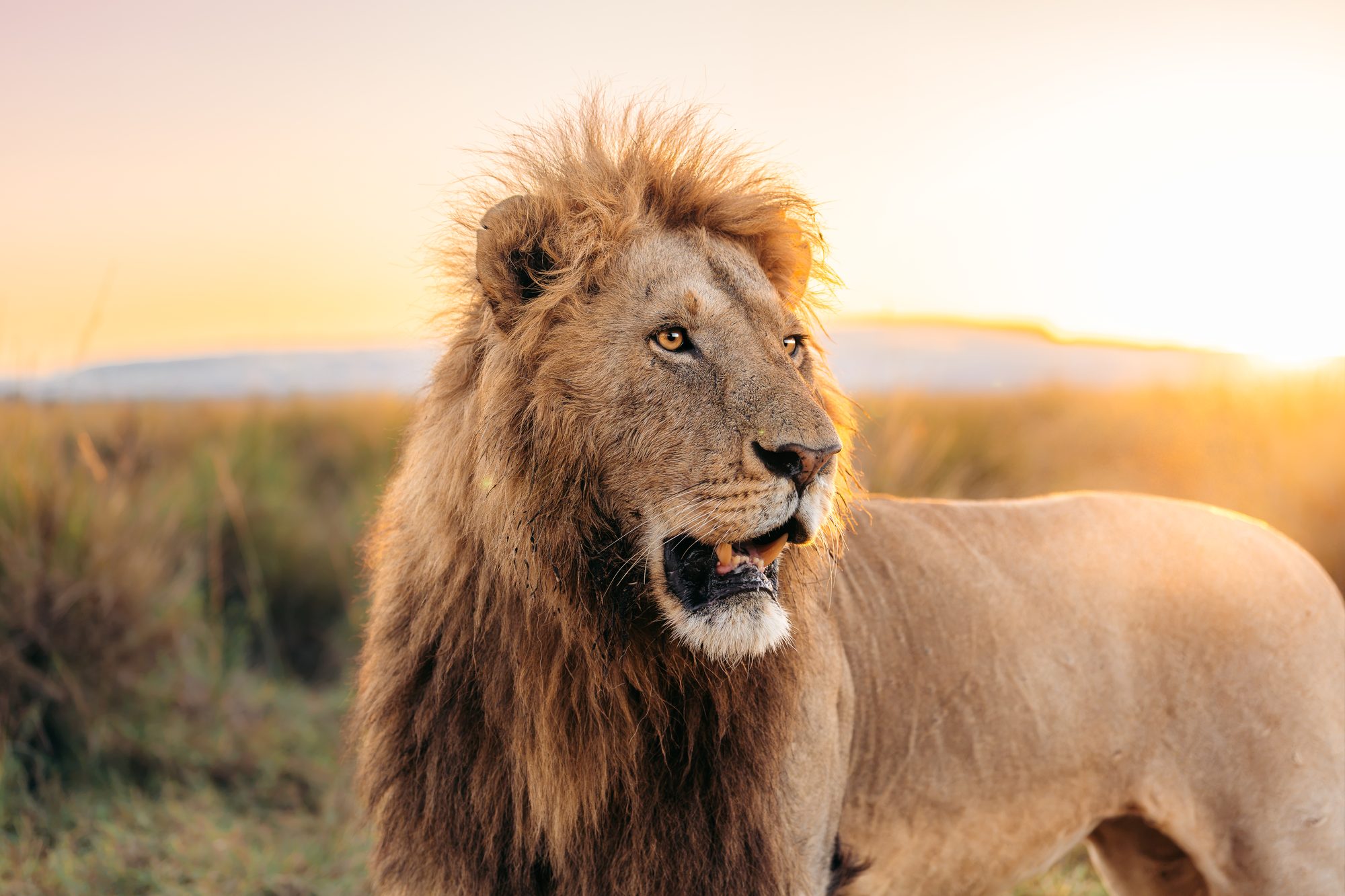
If you are patient, and you understand positioning and behaviour, you can take nice photos. A good guide matters. Lighting is everything — whether you want the sun behind you, side light, backlight. I did my safari guide qualifications two years ago, so I am technically a qualified guide as well. Lions have tell-tale signs when they are lying down, when they are about to get up, when they are going to move. Once you have taken the time to understand that, it is almost a sixth sense of where they will go.

Where did all of this start?
When I was thirteen we went on a family safari to Samburu, to Elephant Watch Camp. The staff were amazing. We had a guide who showed us everything — tracks, dung, plants, every animal. The camp worked closely with Save the Elephants. They knew every individual by name. They had a booklet for each one. For me at thirteen, and my sister at eleven, that was it. I just absolutely loved it.
My dad bought a camera for the trip, and I ended up stealing it. I photographed everything. From then on I have loved African wildlife, research, and conservation, and that is also where photography started.
Biology became my favourite subject at school. Every summer I tried to get back to Africa — conservation trips, another family safari to Tanzania, research. That led to Edinburgh, a BSc in Biology with Zoology. I started in September 2023.
And the sport photography?
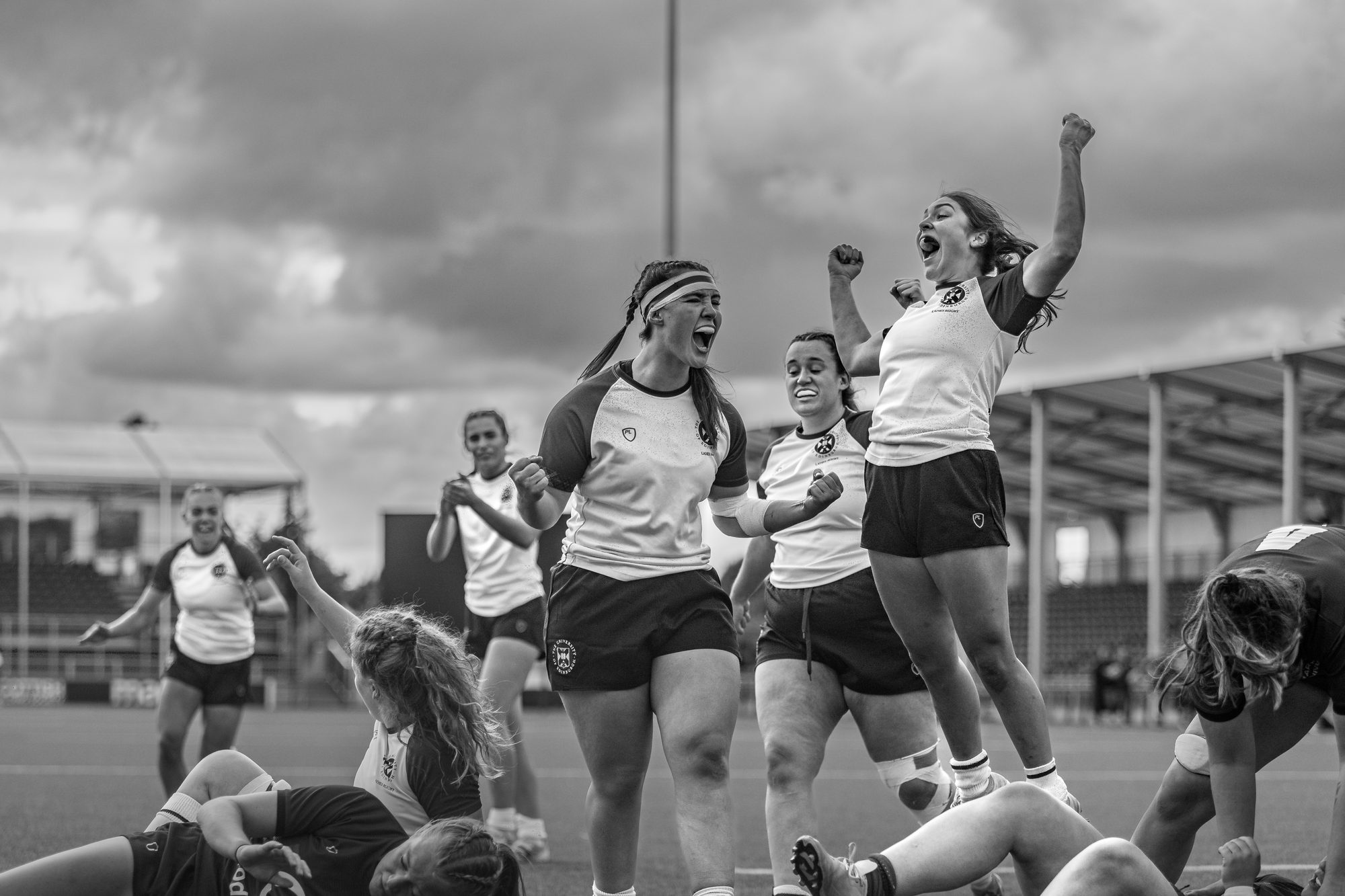
I met my girlfriend at uni. She plays rugby. I thought I would take a camera to one of her games, because everyone loves photos of themselves. I did it the next week, and kept doing it. Then other people asked — basketball, football. I worked for free until the uni offered me a job in second year. Then I set up freelance work. A lot of rugby, including Edinburgh Rugby.
I am really passionate about women’s sport. Those players need to be seen. Photography can put them on people’s feeds — not just professional men. The uni women’s side, then Edinburgh, they are incredible. They need to be shown.
Was choosing biology, and photography, intentional? How did you end up in Edinburgh?
I was born in the south of England. We moved to Dubai when I was three, and I lived there until I was thirteen, then boarding school in England. When it came to uni I looked around. Edinburgh has one of the best biology schools in the UK. It is also an incredible city. In fifteen minutes you can be out among tractors and sheep. I have fallen in love with the city as well.
They both stem from that first safari, in a way. That is when I started taking photos, and it is also when I got interested in how they collared elephants, tracked them, understood their behaviour. Through school I got more and more into biology — not only wildlife. I loved genetics too. Then wildlife linked back to photography, and animal behaviour linked back to biology. It weaves in and out.
Could you have gone fully academic?
I would never choose one path and only stick to that. I could not only do research for the rest of my life. I would not want to. Even if I chose photography, I would not want to be a sports photographer every day, because that would not excite me enough. I would always want wildlife and nature. I would always want research and conservation.
It is tricky at the moment to figure out the next steps. I have this worry that whatever I do first, I will be stuck doing it. I want to make sure other things can still happen. I think it is going to be forming my own path a little bit, and seeing what works. I am not sure. I do not know.
The camera is how I tell stories. That is the angle I like, as opposed to putting myself in a photography niche.
How do you keep the love of it, when the days are long?
It is tough. The photos I post are the best part. Waiting for a crossing is five or six hours. You wake up at 5.30 to be out before first light. Most nights I am up until 10 or 11 editing, then up again at 5.30. Fieldwork is harder than photography. Last summer I was a research assistant with the Kyambura Lion Monitoring Project in Queen Elizabeth National Park, Uganda. They have been monitoring lions, leopards, hyenas since 2023. Completely funded by donors. Everyday you are fighting for resources just to do the job. I still work with them on papers.
With social media being such a big part of the work, you have to keep telling yourself why you started. I post a photo because I like it, and the people closest to me like it — not because ten thousand people do or do not. If you wake up and you are not excited, something is wrong. I need the diversity. I could not be a sports photographer every day for the rest of my life. I would get bored.
How do you make that emotional connection — with animals, and with people?
It starts from loving the subject. I love shooting rugby because I love rugby. I have shot hockey, netball, lacrosse. I did not grow up playing those, and I find them a lot harder — not only because I do not love them in the same way, but because I cannot predict what is going to happen. In a rugby game I can tell where the ball is going, where the play will end up. That makes the photos better.
Same with wildlife. If you love a bird species other people walk past, you understand their behaviour, you know how interesting their lives are, and you can bring more out of the picture. You spend more time. You spend more time in the edit. That connection is probably what I would like to make me different.
Some jobs you do to keep the cameras ticking over. When I go down to a rugby game, or I go out for wildlife, I just love being there. My whole day is waiting for it to start.
Sport and wildlife seem very different. Are they?
They are closer than they look. It is not like studio photography, where it is all in my control. I much prefer it when it is not. A sports match is happening. I am not telling people what to do or where to go. I am telling the story of what is there. Same with wildlife. You are not asking a lion to pose. You adapt. You document what they are doing.
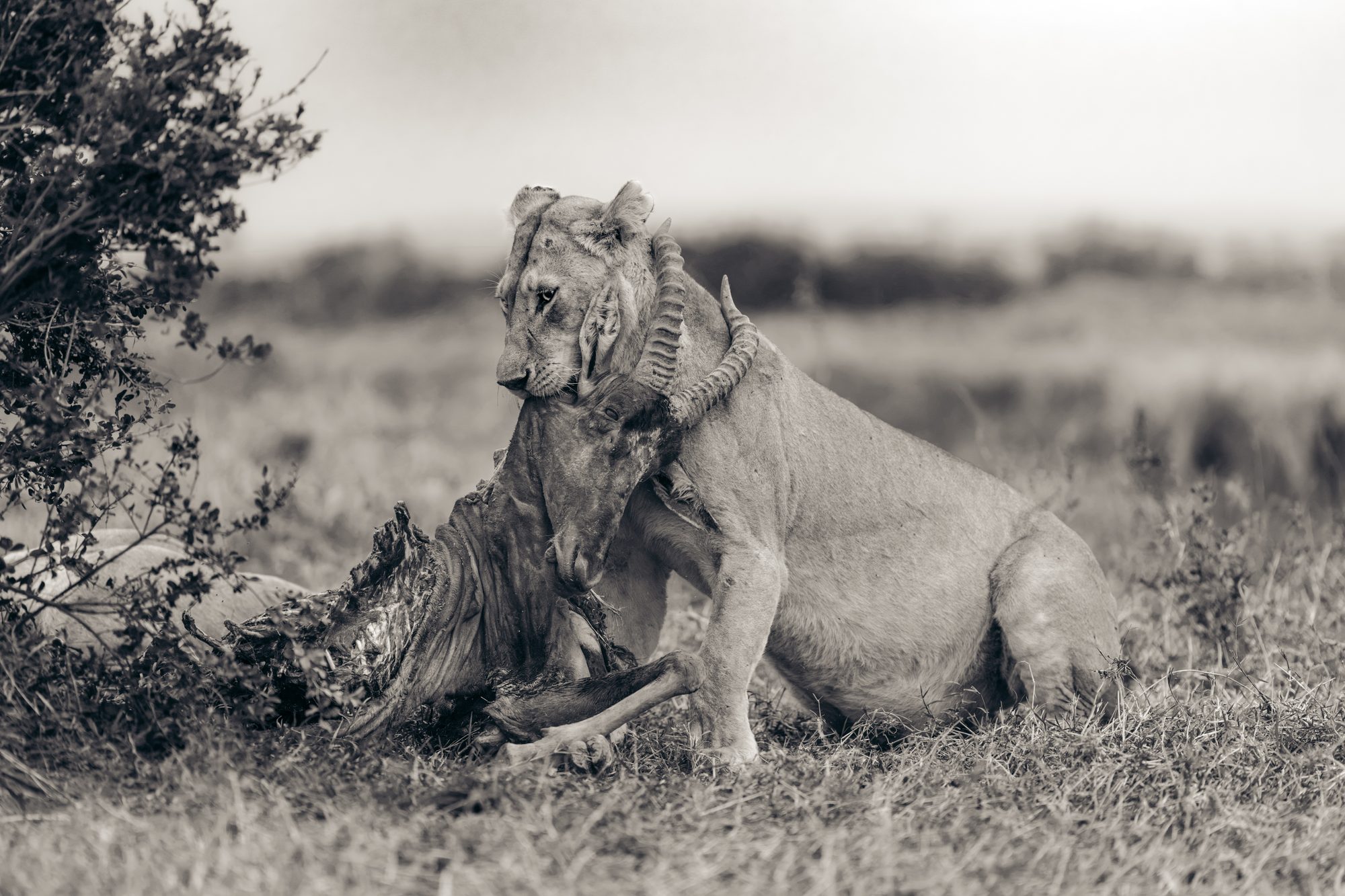
A lot of the time the story happens in the field. The other day an elephant had died, and hyenas and lions were fighting over it. A male lion came in and chased the hyenas. You film that and it builds itself — a one-minute reel, a mini wildlife documentary. Sometimes the story comes afterwards, in the colour, or in whether you leave it in black and white.
I love black and white. It is not everyone’s cup of tea. You can portray so much emotion. The only thing you have to see is the emotion. Nothing else in the image is distracting you. That is when you have to think about the person looking at it, and what they will feel.
What would you like to be known for?
As a person: that I deeply care about the work, and about the subjects I shoot. I am not just someone who shows up, takes photos, and leaves. I want anyone I have worked with, or shot for, to think I really cared about what I did, and I cared about them.
With the work: an emotional connection. For people to feel they understand what is going on — like they were there with me.